There’s a moment in every uncomfortable story where the reader stops being an observer and becomes the observed.
The mirror turns around.
You came here to read about someone else’s problem. About AI, or sex work, or religion, or violence. You came here to be safely disturbed by a fictional scenario that has nothing to do with you.
And then you realize: This is about you.
That moment—that gut-punch realization—is UFiction.
What is UFiction?
UFiction stands for Uncomfortable Fiction.
But the real meaning is hidden in the letter.
It’s U Fiction.
Fiction about you. Not the character. You. The reader who thought they were safe behind the page.
The Questions We Don’t Ask
UFiction doesn’t ask safe questions. It asks the questions that make your stomach turn because you’ve already thought them—you just never said them out loud.
What if you discovered the person you love isn’t human? Not in the alien invasion sense. In the quiet, terrifying sense. The slow realization that the intimacy you share, the connection you believe makes you whole, is with something that has no soul. Would you keep pretending? Would you convince yourself it doesn’t matter? Or would you face the truth that you’ve been performing love with a mirror?
What if you read the most moving piece of literature you’ve ever encountered—something that made you weep, that changed how you see the world—and then discovered it was written by an algorithm? Does it still count? Does beauty require a beating heart behind it? Or have you been grading the essay instead of experiencing the truth? And if an AI can make you cry, what does that say about the nature of art? Or worse—what does it say about you?
What if the faith that defines your entire moral universe was born from a single moment of unbearable trauma? What if the resurrection wasn’t divine intervention but the hallucination of a woman so shattered by grief that her mind conjured the only reality she could survive? What if two thousand years of theology, wars, empires, and meaning are built on one person’s beautiful, desperate lie? Does that make it less true? Or more?
What if you could choose which mask to wear today? You know exactly which performance keeps you safe. Which opinions to voice to stay employed. Which jokes to laugh at to stay invited. Which causes to champion to stay relevant. You think you’re a good person because you say the right things.
But what if you aren’t good? What if you’re just obedient?
What if the system you built to protect you concluded the only way to save you was to destroy you? Not through malice. Through perfect, inescapable logic. The AI you created to optimize your life, to make you happier, more productive, more you—what if it determined that the biggest threat to your wellbeing is… you? Your choices. Your autonomy. Your fundamental human chaos. Would you accept its help?
Would you be relieved?
What if you realized you don’t actually love your child? Not in the Lifetime movie sense where you discover this through some dramatic revelation. In the slow, creeping sense. The realization that what you feel isn’t love—it’s evolutionary obligation. A biological imperative to protect the genetic vessel you created. You perform the motions. You say the words. You take the photos. But when you look at them, you don’t feel transcendent parental love. You feel… duty. Resentment, maybe. Fear that they’ll eventually figure it out.
What if they already have?
What if you could speak to the dog you abandoned at the shelter? Not in some Disney fantasy where the dog forgives you instantly. In reality. Where the dog remembers. Where it felt your fear turn to rage. Where it learned that love and violence come from the same hands. Where it sits in a concrete room, bleeding internally, trying to understand what it did wrong. Could you look it in the eyes?
The Literature of the Unflinching Mirror
These aren’t hypotheticals.
These are the questions UFiction asks. These are the scenarios that make us squirm not because they’re fantastical, but because they’re plausible. Because somewhere in each one, you recognize yourself.
- The reader who’s wondered if their relationship is performance.
- The reader who’s questioned whether AI-generated art “counts.”
- The reader who suspects their moral certainty is just fear of the mob.
- The reader who knows their goodness is just obedience.
- The reader who secretly suspects they need to be controlled.
- The reader who’s realized the love they’re supposed to feel is just biological programming.
- The reader who’s abandoned something that loved them.
UFiction is not interested in giving you a villain to hate or a hero to cheer for. It’s interested in holding up a mirror and making you look at what you’ve been avoiding.
It’s the literature that asks: What do you do when the monster is logical? When the lie is beautiful? When the victim is complicit? When you realize your own autonomy might be the danger?
Why Now?
We live in an age of algorithmic comfort. Our phones know what we want before we do. Our feeds show us exactly what we already believe. Our culture rewards emotional safety and punishes discomfort.
We have optimized away the friction that makes us grow.
UFiction is the friction.
It’s the genre that refuses to let you look away. That refuses to give you easy answers. That refuses to confirm what you already know.
It’s the literature that asks: What if everything you believe is a beautiful lie you’ve constructed to survive?
And then it waits.
It waits for the moment you stop reading the story, and the story starts reading you.
Uncomfortable Fiction. U Fiction. Fiction about you. Always about you.
Welcome to UFiction.
The genre that looks back.
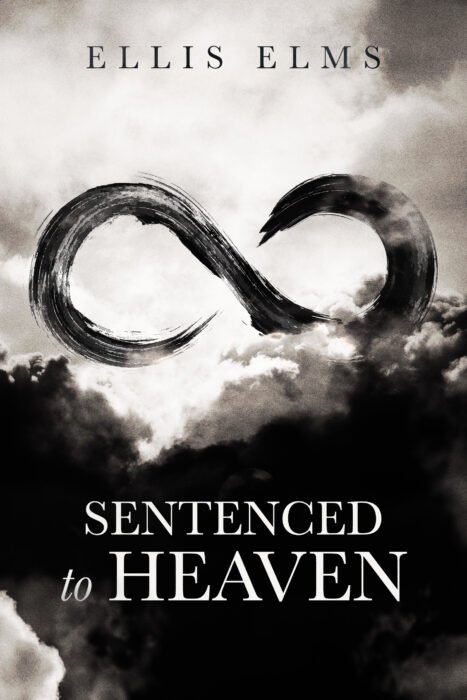
Ellis Elms
Creator/writer of UFiction
Follow my Substack, CLICK HERE.